

Travel Calendar 2026: Plan Your Perfect Year of Adventures.
Authors / Photo source: Unsplash.
Contents:
- January: Winter sun in the desert and steep mountain slopes.
- Dubai, UAE: A comfortable season in the desert.
- Bansko, Bulgaria: A European ski resort.
- February: Eastern exoticism and Brazilian carnivals.
- Oman: Authentic East.
- Rio de Janeiro, Brazil: The city of carnival.
- March: Spring in different hemispheres.
- Marrakech, Morocco: Comfortable spring.
- Kyoto, Japan: Cherry blossom season.
- April: Europe’s spring awakening.
- Amsterdam, Netherlands: Tulip festival.
- Istanbul, Turkey: Perfect weather.
- May: Exploring the beauty of the Mediterranean and the Atlantic.
- Santorini, Greece: The start of the island season.
- Lisbon and the coast, Portugal: Spring sunshine of the Atlantic.
- June: Comfortable vacations in Iceland and Croatia.
- Croatian coast: An Adriatic gem.
- Iceland: White nights and green valleys.
- July: Peak of the summer season.
- Norwegian fjords: Land of the midnight sun.
- Bali, Indonesia: Dry season on the Island of the Gods.
- August: Continuation of summer holidays.
- Scottish Highlands: Land of castles and heather.
- Zanzibar, Tanzania: The Spice Island.
- September: The velvet season.
- Tuscany, Italy: Autumn moods.
- Jordan: Deserts and antiquities.
- October: Golden autumn in Japan and Peru.
- Japan: Momiji season (red leaves).
- Peru: Dry season in the Andes.
- November: Low season — time for discoveries.
- Egypt: The Red Sea without the heat.
- Vietnam: The golden midpoint of the dry season.
- December: Winter holidays and southern summer.
- Mexico: Caribbean coast for New Year.
- New Zealand: Summer adventures in winter.
The right timing for a trip is half the success of a perfect vacation. High season means comfortable weather, open attractions, and optimal conditions for relaxation, while poorly planned journeys can result in rain, closed beaches, or exhausting heat. This calendar will help you plan 2026 so that every trip delivers maximum impressions. We have thoroughly analyzed climate conditions, cultural events, and practical aspects of visiting different regions of the world month by month. Use this guide to find a trip that perfectly fits your schedule and expectations.
January: Winter sun in the desert and steep mountain slopes.
In January, it is comfortable to explore Dubai and go skiing in Bulgaria.
Dubai, UAE: A comfortable season in the desert.

Authors / Photo source: Fredrik Öhlander/Unsplash.
January is considered the optimal time to visit Dubai thanks to pleasant daytime temperatures of +24–27°C and evening temperatures of +14–16°C. The water in the Persian Gulf warms up to +21–22°C, making swimming possible, although some travelers may find it cool. Unlike the summer months, when temperatures exceed +40°C, January weather is ideal for long walks and sightseeing.
This is the time of the Dubai Shopping Festival — the largest sale event in the region, attracting visitors with great deals on electronics, clothing, and luxury goods. Visit the Burj Khalifa observation deck on the 124th floor (tickets are recommended to be booked 2–3 weeks in advance), stroll through the historic Al Fahidi district with its traditional wind towers, and explore the Museum of the Future exhibitions.
Be sure to plan a safari in the Rub’ al Khali Desert. January temperatures in the desert are comfortable for dune bashing in jeeps, camel rides, and evening gatherings at a Bedouin camp. Many tour operators offer programs with a traditional dinner, belly dance shows, and stargazing. How to get from the city center to the desert: the airport transfer usually takes 45–60 minutes, and most tours include hotel pickup.
Bansko, Bulgaria: A European ski resort.

Authors / Photo source: Vitaliy Paykov/Unsplash.
Bansko offers high-quality ski infrastructure at prices significantly lower than Alpine resorts. In January, there is a stable snow cover, with temperatures ranging from -5 to -2°C, which is comfortable for skiing. The resort has 75 km of slopes of varying difficulty on the slopes of Mount Todorka in Pirin National Park, a UNESCO World Heritage site.
A modern gondola system takes visitors to an altitude of 2,600 meters in 25 minutes. The slopes are suitable both for beginners (green and blue runs in the Banderishka Polyana area) and experienced skiers (the black runs Tomba and Alberto Tomba). Ski schools operate with instructors who speak English, German, and other European languages.
After skiing, visit Bansko’s old town with its 19th-century stone houses and traditional taverns (mehanas) serving banitsa, kebapche, and local wine. Five kilometers away are the Dobrinishte thermal springs with water temperatures of +37–43°C — an excellent way to relax muscles after an active day. The airport transfer from Sofia Airport takes about 2.5–3 hours along a scenic mountain road.
February: Eastern exoticism and Brazilian carnivals.
An ideal time to travel to the East and to Rio.
Oman: Authentic East.
Authors / Photo source: Anfal Shamsudeen/Unsplash.
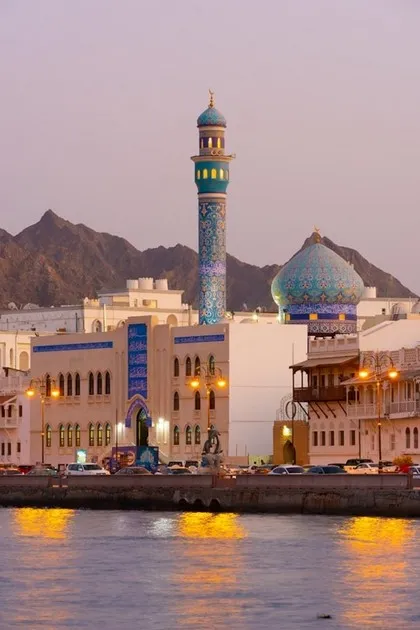
February offers ideal climatic conditions in Oman: daytime temperatures of +24–26°C, nighttime +16–18°C, and minimal precipitation. The water temperature in the Gulf of Oman reaches +22–24°C. Unlike neighboring emirates, Oman has preserved a traditional way of life and offers a calmer, more contemplative type of tourism.
Muscat, the capital, is known for the Sultan Qaboos Grand Mosque, which accommodates 20,000 worshippers and is decorated with a Persian carpet weighing 21 tons. Visit the Royal Opera House, the Mutrah Souq with traditional goods (frankincense, silver, spices, textiles), the Mutrah and Al Jalali forts from the 16th century. Walk along the 3-km Corniche promenade with views of the mountains and the bay.
The main impressions await beyond the capital. Wadi Shab is a canyon 140 km from Muscat with emerald natural pools, reached via a scenic trail (about 40 minutes on foot). At the end of the route is a hidden cave with a waterfall, accessible by swimming 100–150 meters. Nizwa, the ancient capital, is interesting for its 17th-century round fort and Friday livestock market. Jebel Akhdar (“Green Mountain”) at an altitude of 2,000 meters offers terraced gardens, rose plantations, and a cool mountain climate. Traveling to the mountains requires a four-wheel-drive vehicle or an organized airport transfer.
Rio de Janeiro, Brazil: The city of carnival.

Authors / Photo source: VENUS MAJOR/Unsplash.
February in Rio coincides with the carnival period (in 2026 approximately February 13–17) — the largest cultural event in South America. Air temperatures are +28–30°C, water temperatures +25–26°C, and humidity is high (around 80%). Even if the carnival is not in your plans, February remains a good time thanks to the warm weather and summer atmosphere of the Southern Hemisphere.
The carnival consists of a series of samba school parades at the Sambadrome, which holds 90,000 spectators, as well as hundreds of street blocos — free public celebrations across the city. Tickets for Sambadrome parades should be purchased several months in advance. To get to know the city, head up to the Christ the Redeemer statue on Mount Corcovado (710 m), offering panoramic views of Guanabara Bay, beaches, and the city.
Copacabana (4 km) and Ipanema (2 km) beaches are the heart of beach culture, with volleyball courts, kiosks, and promenades. The Santa Teresa district is known for its bohemian atmosphere, art galleries, antique shops, and the yellow Bonde tram running since 1877. The Botanical Garden, covering 54 hectares, features 6,500 plant species, including an avenue of royal palms. The airport transfer from Galeão International Airport to the hotel areas takes 30–50 minutes depending on the district and traffic.
March: Spring in different hemispheres.
With the arrival of spring, we open the cherry blossom season and head to Marrakech.
Marrakech, Morocco: Comfortable spring.
Authors / Photo source: Paul Macallan/Unsplash.
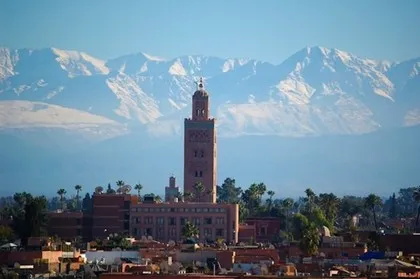
March marks the start of the high season in Marrakech, with daytime temperatures of +20–23°C and nighttime +10–12°C — an ideal balance for exploring the city without summer heat. Rain is rare, daylight hours increase, and snow still covers the Atlas Mountains, creating a picturesque contrast with the greening valleys.
The Medina of Marrakech, a UNESCO World Heritage site, is a labyrinth of narrow streets with traditional riads, mosques, madrasas, and palaces. Jemaa el-Fna Square turns into an open-air theater in the evening with snake charmers, storytellers, musicians, and dozens of food stalls serving local cuisine. Visit the 19th-century Bahia Palace with its mosaic courtyards, the Majorelle Gardens with cacti and bamboo groves (created by artist Jacques Majorelle and later acquired by Yves Saint Laurent), and the 14th-century Ben Youssef Madrasa.
Day trips from Marrakech include excursions to the Atlas Mountains with visits to Berber villages, the 110-meter Ouzoud Waterfalls, and the coastal town of Essaouira (3 hours away) with its Portuguese fortress and surfing beaches. Hammams and spa treatments in riads complete the cultural immersion into Moroccan traditions.
Kyoto, Japan: Cherry blossom season.

Authors / Photo source: James Pere/Unsplash.
Late March to early April is the period of hanami — cherry blossom viewing — one of Japan’s most important cultural phenomena. Air temperatures are +12–16°C; rain is possible, but the blossoms create an unforgettable atmosphere. Blooming dates vary each year (usually the last week of March to the first week of April) and are forecast by meteorological services about a month in advance.
Kyoto, Japan’s historical capital for a thousand years, has 17 UNESCO World Heritage sites, including temples, shrines, and castles. The Golden Pavilion (Kinkaku-ji), covered in gold leaf, reflects in a mirror-like pond. The Arashiyama Bamboo Grove forms a tunnel of 20-meter-high stalks. The Gion geisha district has preserved wooden machiya houses where traditional tea houses host performances. The Fushimi Inari Shrine is famous for its tunnel of 10,000 red torii gates leading up the mountain.
The Philosopher’s Path (2 km along a canal) is lined with hundreds of cherry trees and connects several temples. The Kyoto Imperial Palace is open to visitors with prior registration. Traditional kaiseki cuisine (a multi-course menu) reaches its peak in Kyoto’s restaurants. The airport transfer from Kansai Airport takes 75–90 minutes by express train or bus; from Tokyo it takes 2 hours 15 minutes by Shinkansen.
April: Europe’s spring awakening.
In April, we admire blooming tulips and explore Istanbul.
Amsterdam, Netherlands: Tulip festival.

Authors / Photo source: Andrei Popescu/Unsplash.
April presents Amsterdam at its most picturesque: tulips bloom in parks, temperatures rise to +12–15°C, and daylight extends to 14 hours. From April 20 to May 1, King’s Day (Koningsdag on April 27) is celebrated — a national holiday with street concerts, flea markets, and an orange dress code.
The Keukenhof Gardens, 40 km from Amsterdam, display 7 million bulb flowers across 32 hectares — the world’s largest flower exhibition (open from mid-March to mid-May). The display includes tulips, daffodils, and hyacinths in landscaped compositions with ponds, windmills, and pavilions. In the city, visit the Museum Quarter with the Rijksmuseum (Dutch painting, including Rembrandt and Vermeer), the Van Gogh Museum (the largest collection of the artist’s works), and the Anne Frank House.
Cycling remains the best way to explore the city — there are over 500 km of bike paths. Ride along the 17th-century canal belt (UNESCO), visit the Jordaan district with antique shops and cafés, and the Albert Cuyp Market. A 60–75-minute canal cruise shows the city from a unique perspective. The floating flower market on Singel has operated since 1862. The airport transfer from Schiphol Airport to the city center takes 15–20 minutes by train or 30–40 minutes by car.
Istanbul, Turkey: Perfect weather.

Authors / Photo source: Süheyl Burak/Unsplash.
April is considered one of the best months to visit Istanbul: temperatures of +15–18°C, greenery after winter, moderate humidity, and tourist flows that have not yet reached summer peaks. This is the time of the Tulip Festival, when millions of bulbs are planted in parks — a legacy of Ottoman culture, where the tulip symbolized paradise.
Istanbul, the only city on two continents, offers a concentration of historical landmarks. Sultanahmet combines the Blue Mosque with six minarets and 20,000 Iznik tiles, Hagia Sophia (6th century), Topkapi Palace — the residence of Ottoman sultans with its treasury and harem — and the Basilica Cistern, an underground reservoir with 336 columns. The Grand Bazaar, one of the largest covered markets (61 streets, 4,000 shops), has operated since 1461.
Cross the Bosphorus by ferry (15–20 minutes, a few dollars) to the Asian side — Kadıköy and Üsküdar districts with a local atmosphere, markets, and waterfronts. Climb the Galata Tower (14th century) for panoramic views of the Golden Horn. Try street food: simit (sesame rings), balik ekmek (fish sandwich), stuffed mussels with rice. The Çemberlitaş Hammam (1584) offers an authentic bath ceremony. Istanbul’s airports (new IST and Sabiha Gökçen) are connected to the center by airport transfers, with travel times of 45–90 minutes depending on location.
May: Exploring the beauty of the Mediterranean and the Atlantic.
In May, you can head to the island of Santorini or walk under blooming jacarandas in Portugal.
Santorini, Greece: The start of the island season.
Authors / Photo source: Tânia Mousinho/Unsplash.
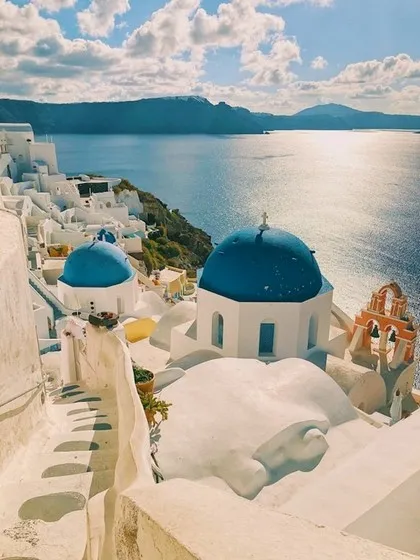
May opens the season on the Greek islands with comfortable conditions: air temperatures of +22–25°C, water +19–21°C (cool for swimming, though some visitors do swim), minimal rainfall, prices 20–30% lower than in summer, and fewer tourists. Santorini welcomes visitors with green vineyards, blooming bougainvillea, and clear sunsets without summer haze.
This volcanic island is famous for its caldera — a flooded crater with sheer cliffs up to 300 meters high, topped by whitewashed villages. Oia at the northern tip offers iconic sunsets (arrive an hour early to secure a spot). Fira, the capital, has museums, restaurants, and a cable car down to the old port. Visit wineries producing Assyrtiko — white wine from grapes grown in volcanic soil (tastings usually include 4–6 wines with snacks).
The Akrotiri archaeological site is a Minoan settlement buried by an eruption 3,600 years ago — often called the “Greek Pompeii” — with preserved frescoes. Santorini’s beaches are unusual: Red Beach with crimson cliffs, Perissa Black Beach with volcanic sand and taverns. Pyrgos village, the island’s historic center, offers narrow streets, churches, and crowd-free panoramas. Ferries connect Santorini with Athens (5–8 hours) and other Cyclades islands; flights are also available (50 minutes from Athens).
Lisbon and the coast, Portugal: Spring sunshine of the Atlantic.

Authors / Photo source: Tom Byrom/Unsplash.
May in Lisbon combines warm weather (+22–24°C), rare rain, and blooming jacarandas that paint the streets lilac. Ocean temperatures are +17–18°C — cool for swimming, but Cascais and Estoril beaches are pleasant for walks. This is a time of cultural events and open terraces.
Lisbon, spread across seven hills, requires several days. The Alfama district is the oldest quarter, with a maze of alleys, azulejo tile panels, and fado houses. The Belém Tower (16th century) and Jerónimos Monastery represent the Manueline style — Portuguese late Gothic. Tram No. 28 runs through the historic center, climbing hills (40–50 minutes). Miradouros (Santa Luzia, Graça, Senhora do Monte) offer panoramas of terracotta roofs and the Tagus River.
Take a trip to Sintra (35 km, 40 minutes by train) — a royal retreat with romantic palaces. Pena Palace is a colorful cliff-top palace resembling a Bavarian castle. Quinta da Regaleira features a 27-meter-deep initiation well, grottoes, and mystical symbols. Cape Roca is the westernmost point of mainland Europe with a lighthouse and ocean views. In Lisbon, try pastéis de nata (custard tarts) at the Belém bakery operating since 1837, and bacalhau (cod) prepared in one of its 365 recipes. The airport is 7 km from the center; the airport transfer takes 15–25 minutes.
June: Comfortable vacations in Iceland and Croatia.
The best time to relax in Croatia and Iceland.
Croatian coast: An Adriatic gem.

Authors / Photo source: Spencer Davis/Unsplash.
June opens the beach season on the Adriatic with comfortable conditions: air temperatures of +25–28°C, water +22–24°C, minimal rainfall, and daylight up to 15 hours. Unlike crowded July and August, June offers more freedom in choosing accommodation and beaches. Croatia boasts 1,777 km of coastline with pebble beaches, medieval towns, and over 1,000 islands.
Dubrovnik, the “Pearl of the Adriatic,” is known for its 2-km-long city walls offering views of terracotta roofs and azure sea. The main street Stradun crosses the old town from Pile Gate to the harbor. Visit the Rector’s Palace, the Franciscan Monastery with its 1317 pharmacy (the oldest operating in Europe), and take the cable car up Mount Srđ for panoramic views. Day trips from Dubrovnik include Montenegro (Kotor, 2 hours away) and the Elaphiti Islands.
Split, the second-largest city, grew around Diocletian’s Palace (4th century), whose walls now house cafés, apartments, and shops. The Riva promenade is the center of evening life. From Split, islands are accessible: Hvar with lavender fields and nightlife, Brač with Zlatni Rat beach — a shape-shifting pebble spit, and Korčula, the birthplace of Marco Polo. Plitvice Lakes National Park, 2.5 hours from the coast, features 16 cascading lakes and waterfalls. Transfers between coastal cities are by bus (a scenic coastal route) or catamaran.
Iceland: White nights and green valleys.
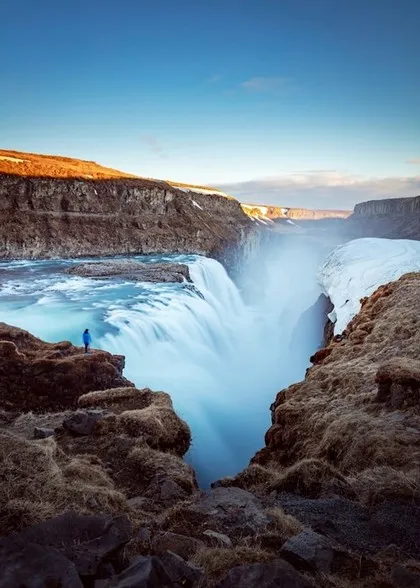
Authors / Photo source: Khamkéo/Unsplash.
June presents Iceland at its most accessible: temperatures of +10–15°C, mountain roads open after winter, about 21 hours of daylight (the sun sets after midnight and rises at 3 a.m.), and lush greenery after spring. This is the optimal time to travel around the island, though the Northern Lights are not visible.
Reykjavík, the world’s northernmost capital, is compact and can be explored in a day: the Harpa Concert Hall with its glass façade, Hallgrímskirkja Church with its 75-meter tower, and the old harbor with whale-watching tours. Most travelers use the city as a base for excursions. The Golden Circle combines three sites within 100 km of the capital: the Geysir geothermal area (Strokkur erupts every 5–10 minutes up to 20 meters), Gullfoss (“Golden Waterfall”) at 32 meters, and Thingvellir National Park — the site of the first parliament and the rift between the Eurasian and North American tectonic plates.
The South Coast includes Seljalandsfoss (a path runs behind the waterfall) and Skógafoss (60 meters high), the black volcanic beach Reynisfjara with basalt columns, and Jökulsárlón Glacier Lagoon with icebergs. The Blue Lagoon is a geothermal spa with milky-blue water at +37–40°C, rich in minerals (booking 1–2 weeks in advance is recommended). Car rental offers freedom of movement, though organized tours with airport transfer handle logistics for those less confident driving Icelandic roads.
July: Peak of the summer season.
Discovering summer vacations in Norway and Bali.
Norwegian fjords: Land of the midnight sun.
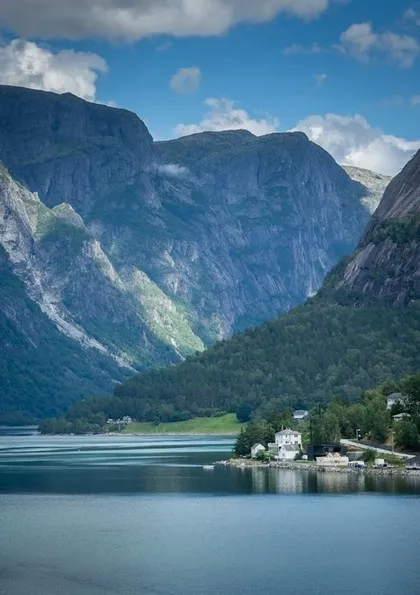
Authors / Photo source: James Armes/Unsplash.
July is peak season in Norway with temperatures of +15–20°C, no snow even in the mountains (all tourist routes are open), and the midnight sun in northern regions. Water in the fjords warms to +15–17°C — cool but swimmable for hardy swimmers. This is the time of maximum daylight, allowing for long, active days.
Bergen, the gateway to the fjords, is famous for Bryggen — the row of colorful wooden houses of Hanseatic merchants from the 14th century (UNESCO). The Fløibanen funicular takes visitors up Mount Fløyen (320 m) in 6 minutes for views of the city and surrounding fjords. Fjord cruises depart from Bergen: Sognefjord stretches 204 km and reaches depths of 1,300 meters — the longest and deepest fjord in the country; its narrow branch Nærøyfjord (only 250 meters wide) is a UNESCO site. Hardangerfjord is known for blooming fruit orchards and the 182-meter Vøringsfossen waterfall.
The Flåm Railway (Flåm–Myrdal) is considered one of the most scenic in the world — 20 km of mountain serpentine with tunnels and waterfall views (50-minute ride). Trolltunga is a rock plateau jutting out over a lake at 700 meters, requiring 10–12 hours of round-trip trekking and good fitness. Preikestolen (“Pulpit Rock”) — a flat cliff above Lysefjord — is more accessible (4–5 hours of trekking). Norway’s waterfalls impress with their scale: Vinnufossen, at 860 meters, is the highest in Europe. Transfers between cities are by bus, ferry through the fjords, or domestic flights.
Bali, Indonesia: Dry season on the Island of the Gods.

Authors / Photo source: Guillaume Marques/Unsplash.
July is the high season in Bali thanks to dry weather (rain is rare), temperatures of +27–30°C, water +27–28°C, and comfortable humidity around 70%. Southeast trade winds bring refreshing breezes, especially valued on southern beaches. This is peak time for surfing on the east coast, cultural festivals, and maximum tourist flow.
Ubud, the cultural heart of the island in the central highlands, is surrounded by rice terraces (Tegalalang being the most photogenic), temples, and art galleries. The Puri Saren Royal Palace hosts traditional Legong and Barong dance performances. The Sangeh Monkey Forest is home to 700 long-tailed macaques (keep belongings secure). Visit Tirta Empul Temple with purification springs where Balinese perform ritual ablutions.
Tanah Lot Temple on an ocean rock on the west coast is most picturesque at high tide during sunset. On the east are the Tirta Gangga water palace with pools and fountains, and Lempuyang Temple with its “Gate of Heaven” framing Mount Agung (the climb requires ascending 1,700 steps). Southern beaches vary: Seminyak with clubs and restaurants, Nusa Dua with white sand and calm waters, and Uluwatu with surf for experienced surfers. Jatiluwih rice terraces (UNESCO) showcase the traditional subak irrigation system. Ngurah Rai Airport is located between Kuta and Nusa Dua; the airport transfer to Ubud takes 1.5–2 hours depending on traffic.
August: Continuation of summer holidays.
We travel through Scotland and Tanzania.
Scottish Highlands: Land of castles and heather.
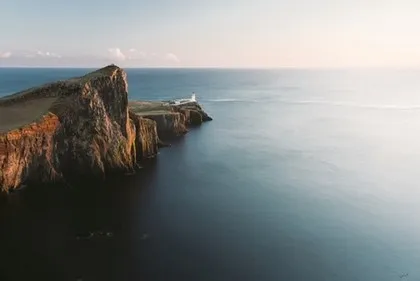
Authors / Photo source: Mike Smith/Unsplash.
August offers the best weather in Scotland: temperatures of +15–19°C, minimal rainfall (though rain is always possible — waterproof jackets are essential), and blooming heather coloring the hills purple. Edinburgh hosts the world’s largest arts festival, the Edinburgh Festival Fringe, with thousands of performances.
Edinburgh, the capital, is dominated by its castle on a volcanic rock, home to the Scottish Crown Jewels. The Royal Mile — a 1.8-km street — connects the castle with Holyrood Palace (the royal family’s summer residence). Climb Arthur’s Seat (251 m), an extinct volcano, for panoramic views of the city and the Firth of Forth. The Old and New Towns are UNESCO-listed.
The Highlands begin an hour’s drive north. Loch Ness stretches 37 km and is home to the legendary monster and the ruins of Urquhart Castle. Glencoe is a dramatic valley with mountains and waterfalls, site of historic clan battles. The Isle of Skye, connected by a bridge, offers the Cuillin mountains, Kilt Rock waterfall, Fairy Pools (turquoise pools), and the Old Man of Storr rock pinnacle. Castles dot the country: Eilean Donan on an island at the meeting point of three lochs is the most photographed; Stirling Castle is the coronation site of Scottish kings. Distilleries in Speyside and Islay offer single-malt whisky tastings and tours. The airport transfer from Edinburgh to Inverness (the Highlands capital) takes 3.5 hours; many travelers rent a car for flexibility.
Zanzibar, Tanzania: The Spice Island.

Authors / Photo source: Dmitry Limonov/Unsplash.
August is the high season in Zanzibar — dry weather, temperatures of +25–28°C, water +26–27°C, and refreshing southeast trade winds. This is the best time for snorkeling and diving with visibility up to 30 meters, calm ocean conditions on the west coast, and comfortable stays outside the rainy season.
Stone Town, the historic part of Zanzibar City, is a UNESCO World Heritage site and one of the best-preserved Swahili cities in East Africa. Its labyrinth of narrow streets reflects a mix of Arab, Persian, Indian, and European architecture. Visit the House of Wonders (Sultan’s Palace) — the first building on the island with electricity and an elevator — the Old Fort, the Anglican Cathedral on the site of the former slave market, and the Sultan’s Palace with a hammam. Markets offer spices, fruits, and fresh fish.
Eastern beaches (Paje, Jambiani) are known for turquoise waters and kitesurfing — August winds are ideal. The northern coast (Nungwi, Kendwa) offers white sand and minimal tides. Prison Island (Changuu), 30 minutes by boat, is home to giant tortoises up to 200 years old. Jozani Forest is home to endemic red colobus monkeys. Spice plantation tours introduce clove, cinnamon, vanilla, and cardamom cultivation — the basis of the island’s 19th-century economy. The airport transfer from Zanzibar Airport to Stone Town takes 15–20 minutes; to the east coast, 50–70 minutes.
September: The velvet season.
The best time to travel to Italy and Jordan.
Tuscany, Italy: Autumn moods.

Authors / Photo source: Patrick Schneider/Unsplash.
September is considered the optimal time for Tuscany: temperatures of +22–27°C, fading summer heat, thinning August crowds, and the start of the grape harvest (vendemmia). Hills turn golden, olives ripen, and farmers’ markets overflow with truffles, porcini mushrooms, and chestnuts. Many wineries host harvest festivals with tastings of young wine.
Florence, the cradle of the Renaissance, concentrates art masterpieces within a compact area. The Uffizi Gallery houses works by Botticelli (“The Birth of Venus”), Leonardo da Vinci, Michelangelo, and Caravaggio (book tickets 1–2 weeks in advance). The Florence Cathedral (Santa Maria del Fiore) with Brunelleschi’s dome dominates the city; climbing the dome (463 steps) offers panoramic views. The Accademia Gallery houses Michelangelo’s “David.” Ponte Vecchio is a medieval bridge with jewelry shops. The Boboli Gardens provide shaded alleys and fountains for a break from museums.
Head to the Chianti Valley between Florence and Siena — rolling hills with vineyards, cypress-lined roads, and stone villas. Siena, with its fan-shaped Piazza del Campo and Gothic cathedral, offers a medieval atmosphere. San Gimignano — the “Medieval Manhattan” — retains 14 of its original 72 towers. Montepulciano and Montalcino are hill towns producing Vino Nobile and Brunello wines. Val d’Orcia is a valley with picture-perfect landscapes that inspired Renaissance artists (UNESCO). Car rental allows free exploration, though organized wine tours with airport transfer handle tastings.
Jordan: Deserts and antiquities.

Authors / Photo source: Juanma Clemente-Alloza/unsplash.
September marks the end of Jordan’s exhausting summer; temperatures drop to +28–32°C, making travel through deserts and archaeological sites more comfortable. The Red Sea in Aqaba stays warm at +26–27°C. By the end of the month, conditions become optimal for active travel.
Petra, the Nabataean city carved into rose sandstone, is one of the New Seven Wonders of the World and requires a full day. Entry through the Siq — a narrow 1.2-km gorge up to 80 meters high — leads to Al-Khazneh (the Treasury), a 43-meter-high façade with Hellenistic columns. Beyond are a 3,000-seat amphitheater, royal tombs, and the Ad-Deir Monastery (800 steps up). The site covers 264 km² and takes several days to fully explore.
Wadi Rum is a desert of red sands and rock formations, a filming location for “Lawrence of Arabia” and “The Martian.” An overnight stay in a Bedouin camp includes dinner, tea by the fire, and stargazing (minimal light pollution creates unforgettable skies). Aqaba on the Red Sea offers snorkeling and diving — coral reefs start just meters from shore. The Dead Sea, at 430 meters below sea level, is the lowest point on land; its 34% salinity allows effortless floating. Amman, the capital, features a Roman amphitheater, the hilltop Citadel with the Temple of Hercules ruins, and modern districts. Transfers between sites take: Amman–Petra 3 hours, Petra–Wadi Rum 1.5 hours, Wadi Rum–Aqaba 1 hour.
October: Golden autumn in Japan and Peru.
We enjoy crimson maple leaves and explore the ancient heritage of the Incas.
Japan: Momiji season (red leaves).

Authors / Photo source: Lucas Calloch/Unsplash.
October opens the autumn foliage season in Japan, when maple trees turn red, orange, and yellow. The process begins in northern regions in September and gradually moves south. Temperatures of +15–20°C are comfortable for long walks, and rainfall is moderate. This is the second most popular season after cherry blossom time, with an atmosphere of contemplation and aesthetics.
Tokyo in October offers autumn parks: the Imperial Palace East Gardens (advance registration required), Shinjuku Gyoen with French, English, and Japanese gardens, and Rikugien — an Edo-period landscape design masterpiece. Visit Senso-ji Temple in Asakusa, the 634-meter Tokyo Skytree, the trendy districts of Shibuya and Harajuku, and Toyosu fish market with its tuna auctions. Mount Fuji (3,776 m) is visible on clear days; the official climbing season ends in September, but October is ideal for viewing the Fuji Five Lakes at its base.
Nikko, 2 hours from Tokyo, is a forested temple and shrine complex (UNESCO), including Toshogu Shrine — the mausoleum of Tokugawa shoguns — decorated with 5,000 carvings. Surrounding forests and the 97-meter Kegon Falls are especially scenic in October. Hakone offers hot springs (onsen), art museums, and a cruise on Lake Ashi with Fuji views (in clear weather). Kamakura is a coastal town with the Great Buddha (a 13-meter bronze statue), temples, and beaches. Shinkansen trains connect cities in 2–3 hours; regional trains are available via JR Pass tourist passes.
Peru: Dry season in the Andes.

Authors / Photo source: Willian Justen de Vasconcellos/Unsplash.
October marks the end of the high season in Peru, when conditions remain favorable for mountain trekking and archaeological visits. Daytime temperatures in Cusco are +15–18°C, nighttime +5–8°C, with minimal rainfall. On the coast in Lima, cool overcast weather persists at +18–20°C without rain. This is the last month of optimal conditions before the rainy season begins in November.
Machu Picchu — a 15th-century Inca city at 2,430 meters, surrounded by cloud forests and mountain peaks — is one of the New Seven Wonders of the World and a UNESCO site. It is reached by train from Cusco (3.5 hours) to Aguas Calientes, then by bus up a serpentine road (30 minutes). Alternatives include the classic Inca Trail (4 days of trekking, permits required months in advance) or shorter routes via Salkantay or Lares. October weather provides clear views and comfortable temperatures for hours of exploration among terraces and temples.
Cusco, the former Inca capital at 3,400 meters, blends Inca masonry (Sacsayhuamán fortress with blocks weighing up to 120 tons) and colonial architecture (the cathedral on Plaza de Armas, Santo Domingo Church built on the foundations of the Coricancha Temple). The Sacred Valley of the Incas includes Pisac with ruins and a colorful market, Ollantaytambo — a living town on Inca foundations with preserved planning, the Maras salt terraces (3,000 pools of pink salt), and the circular Moray terraces — believed to be an Inca agricultural laboratory.
November: Low season — time for discoveries.
In November, it is comfortable to travel in Egypt and enjoy the beauty of Vietnam.
Egypt: The Red Sea without the heat.
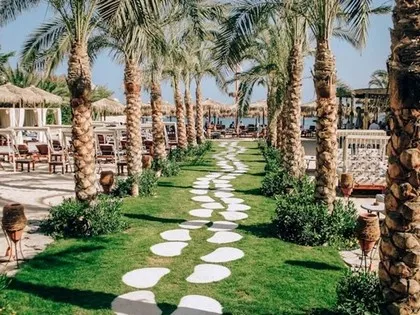
Authors / Photo source: Vegan Oazïs/Unsplash.
November opens the high season in Egypt with daytime temperatures of +24–28°C and evenings at +18–20°C — a comfortable balance after summer’s +40°C. The Red Sea remains warm at +24–26°C, ideal for extended snorkeling and diving. Winds subside, seas are calm, and underwater visibility reaches 30–40 meters. This time attracts European travelers seeking sunshine during autumn holidays.
Hurghada and Sharm El Sheikh are the main Red Sea resorts with developed all-inclusive hotel infrastructure, dive centers, and spas. Coral reefs start just meters from shore and are home to hundreds of tropical fish species (parrotfish, butterflyfish, groupers), green sea turtles, eagle rays, and reef sharks.
Popular dive sites include Ras Mohammed National Park at the southern tip of the Sinai Peninsula with vertical walls and strong currents; Tiran Island with four straits and hammerhead sharks; and the SS Thistlegorm wreck — a British WWII transport ship carrying motorcycles and trucks at a depth of 30 meters. Marsa Alam in the south is known for encounters with dugongs (sea cows) in Abu Dabbab Bay and spinner dolphins at Sataya Reef.
Vietnam: The golden midpoint of the dry season.

Authors / Photo source: Anmol Bindra/Unsplash.
November offers optimal conditions in Vietnam — the transition to the dry season in the southern and central regions, with temperatures of +26–30°C, reduced humidity to 70–75%, and minimal rainfall. The South China Sea warms to +27–28°C. This is a comfortable time for beach vacations, city exploration, and natural attractions before the December–January tourist peak, when prices rise by 30–40%.
Ho Chi Minh City (Saigon), the country’s largest city in the south, showcases a mix of Vietnamese, Chinese, and French influences in architecture and cuisine. Visit the Independence Palace (Reunification Palace) — the site of the South Vietnamese government’s surrender in 1975 — the red-brick Notre-Dame Cathedral (1880), the Central Post Office designed by Gustave Eiffel with ornate metal structures, Ben Thanh Market with food, textiles, and souvenirs, and the War Remnants Museum with exhibits on the Vietnam War. Try street food: pho (rice noodle soup with beef or chicken), banh mi (baguette with pâté, vegetables, and meat), spring rolls, and condensed milk coffee.
Ha Long Bay, 170 km from Hanoi, features 1,969 limestone islands and karsts in an emerald bay (UNESCO). Cruises on traditional junks last from a few hours to 2–3 days with overnight stays and include cave visits (Sung Sot Cave with three chambers, Thien Cung Cave with stalactites), floating fishing villages, kayaking between islands, and swimming at secluded beaches. The Mekong Delta in the south is a maze of waterways with floating markets (Cai Rang, Phong Dien), fruit orchards (longan, rambutan, mangosteen), pagodas, rice paper production, and coconut candy workshops. Domestic flights connect Hanoi and Ho Chi Minh City in 2 hours, and Ho Chi Minh City to Da Nang (for Hoi An) in 1.5 hours.
December: Winter holidays and southern summer.
You can celebrate winter holidays on the hot Caribbean coast or on New Zealand’s beaches.
Mexico: Caribbean coast for New Year.
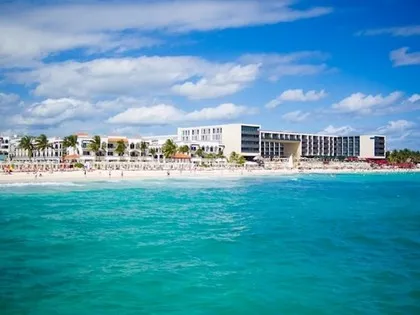
Authors / Photo source: Alisa Matthews/Unsplash.
December opens the high season on the Riviera Maya thanks to comfortable temperatures of +26–29°C, minimal rainfall (the hurricane season ends in November), and a warm Caribbean Sea at +26–27°C. Cancun, Playa del Carmen, and Tulum offer white-sand beaches, coral reefs of the world’s second-largest barrier reef, and Mayan ruins. The Christmas and New Year period from December 20 to January 5 brings peak tourist numbers; booking 2–3 months in advance is recommended.
From Cancun, excursions go to archaeological sites: Chichen Itza (2.5 hours away) with the Kukulkan Pyramid — one of the New Seven Wonders of the World; Tulum — the only Mayan port city on the sea with a fortress atop a 12-meter cliff; and Coba with the 42-meter Nohoch Mul pyramid, which can be climbed. Cenotes — natural limestone sinkholes with freshwater — were sacred to the Maya. Notable ones include Gran Cenote near Tulum, Ik Kil near Chichen Itza with waterfalls and vines, and the Dos Ojos underwater cave system for divers.
Isla Mujeres, 20 minutes by ferry, is known for Playa Norte and the MUSA underwater sculpture museum with 500 statues. Cozumel Island hosts the world’s third-largest coral reef with visibility up to 60 meters — a diver’s paradise. Xcaret Park offers underground rivers for snorkeling and an evening show of Mayan culture. Airport transfers from Cancun Airport: to Cancun 20–30 minutes, Playa del Carmen 45–60 minutes, Tulum 90–110 minutes.
New Zealand: Summer adventures in winter.
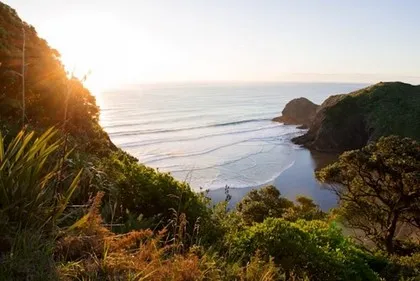
Authors / Photo source: Kyle Myburgh/Unsplash.
December marks the start of summer in the Southern Hemisphere with temperatures of +18–25°C, long daylight hours up to 15 hours, and blooming nature. This is the optimal time for national park trekking, beach vacations on the North Island, and active adventures. New Zealanders celebrate Christmas and New Year with barbecues under the sun; early accommodation booking for December 20–January 10 is recommended.
The North Island offers Auckland with the 328-meter Sky Tower, the islands of the Hauraki Gulf with vineyards and beaches, Rotorua — a geothermal zone with geysers, colorful lakes, and Maori culture. Tongariro National Park’s Tongariro Alpine Crossing (19 km, 7–8 hours) is considered the country’s best one-day trek through lava fields, craters, and Emerald Lakes. The Bay of Islands in the north features 144 islands, dolphins, historic Russell, and waterfalls. Hobbiton near Matamata is the “Lord of the Rings” filming location with 44 hobbit holes.
The South Island concentrates dramatic landscapes. Queenstown is the adventure capital with bungee jumping, skydiving, jet boating through canyons, and wineries. Milford Sound is a fjord with sheer cliffs up to 1,200 meters, waterfalls, seals, and dolphins; cruises last 2–3 hours. Mount Cook National Park contains the country’s highest peak (3,724 m), glaciers, trekking routes, and an observatory for stargazing. Fox and Franz Josef Glaciers descend into temperate rainforest — a unique phenomenon — accessible via guided walks or helicopter tours. Lake Tekapo with the Church of the Good Shepherd and turquoise waters. Domestic flights connect the islands in 1–2 hours; car or campervan rental is popular for flexible travel.
2026 could become your best travel year — if you start planning now while the best accommodation and airport transfer options are still available. Book a car with a driver in advance and enjoy a hassle-free vacation!
More travel photos in our Telegram channel.
Read also other Intui travel news: 12 Grapes, Longevity Noodles & a Lucky Coin Cake: New Year Dishes Around the World.
Intui offers the opportunity to earn money for bloggers and experts in the field of tourism by participating in an affiliate program.
Petrichenko Rimma & Intui travel


