















Shrove Tuesday in the Polish Way: Discover New Intui Destinations for an Unforgettable Celebration!

Authors / Photo source: Pixabay.
Contents:
- Discover the most delicious gastronomy and vibrant carnival at Polish Shrove Tuesday 2026!
- Dive into the heart of Shrove Tuesday 2026 celebrations in Warsaw.
- Explore Nowy Dwór Mazowiecki and its authentic traditions at Shrove Tuesday 2026.
- Have fun at Shrove Tuesday 2026 in Chopin’s birthplace, Żabia Wola.
- See the medieval Shrove Tuesday carnival 2026 on the cobblestone streets of Pułtusk.
- Immerse yourself in family celebrations and folk games in Radzymin.
While the entire Slavic world is busy making pancakes and burning the effigy of winter, Poland hosts a true carnival with donuts, costumes, and street festivities that last a whole week! Imagine entire cities turning into theatrical stages, where everyone can take part in the ancient ritual of seeing winter off. Want to see how Poles celebrate Shrove Tuesday? Intui's new travel destinations in Poland are doing this in a particularly grand way! Get ready for surprises — it’s nothing like what you expect!
Discover the most delicious gastronomy and vibrant carnival at Polish Shrove Tuesday 2026!

Authors / Photo source: Pixabay.
In Poland, Shrove Tuesday is called Zapusty and begins a week before Lent, but it’s not just seven days — it’s a whole culture of celebration with its own traditions for each day. The main day is Tłusty Czwartek (Fat Thursday), when the entire country literally drowns in donuts. Poles eat about 100 million donuts in a single day! From early morning, queues of 30–40 people form outside bakeries, and the most famous bakeries start preparing donuts as early as 3 a.m.
But that’s just the beginning! The next important day is Tłusty Wtorek (Fat Tuesday), when favorites appear on tables — crispy pastry ribbons dusted with powdered sugar. On this day, it’s customary to have family tea parties where everyone gathers around the table.
The celebrations reach their peak during the last three days before Lent — Ostatki. During these days, there are costume balls, street performances, musical concerts, and traditional festivities. City streets fill with people in masks and costumes — from historical characters to fantastical creatures. If you plan to travel to Poland during this period, get ready for your entire trip to be immersed in an atmosphere of universal fun and carnival madness.
Dive into the heart of Shrove Tuesday 2026 celebrations in Warsaw.

Authors / Photo source: Pixabay.
Warsaw becomes the epicenter of celebrations on a scale befitting a European capital. In the Old Town, a large Jarmark Zapustny fair unfolds, where more than 50 stalls offer traditional treats. Here you can try donuts with 15 different fillings — from classic rose jam to exotic mango or salted caramel.
The Palace of Culture and Science turns into the center of folk festivities. A stage is set up on the surrounding square, where folk ensembles, dance groups, and modern musicians perform. Every evening there are free concerts drawing thousands of spectators. Celebrations in the Praga district on the right bank of the Vistula are especially interesting — here, old working-class traditions are preserved. Locals organize real folk festivities with live music, dancing, and traditional games. Bars in the district serve hot beer with honey and cinnamon — a traditional Shrove Tuesday drink. Temporary beer gardens open on Ząbkowska Street, where you can warm up by an open fire and try grilled sausages.
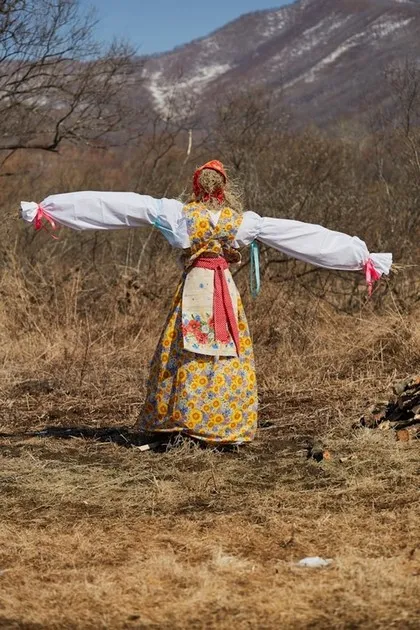
On the last day of Shrove Tuesday, a ceremonial burning of Marzanna — a huge straw effigy 3–4 meters tall symbolizing winter — takes place on the Vistula River bank. The procession moves from the Old Town to the river to the sounds of drums and flutes. After burning, the effigy is thrown into the water (or its symbolic representation), marking the final departure of winter. Airport transfer will let you dive straight into the festive atmosphere of Warsaw without losing precious time on public transport from Chopin Airport.
Explore Nowy Dwór Mazowiecki and its authentic traditions at Shrove Tuesday 2026.
Authors / Photo source: Unsplash.
Want to see an authentic Polish Shrove Tuesday without tourist frills? Head to Nowy Dwór Mazowiecki — a small town 30 km from the capital, where celebrations follow customs passed down through generations. Here, Shrove Tuesday begins with a solemn mass at the Church of St. Michael the Archangel, after which all residents gather at the main square.
The central event is the traditional burning of Marzanna. In Nowy Dwór, this is not just a formal ritual but a real theatrical spectacle. The effigy of winter is carried through the entire town to folk songs, while townspeople dressed in traditional Mazovian costumes perform ancient dances. A unique feature of the local ritual is the “trial of winter,” where selected residents humorously blame winter for the year’s misfortunes, followed by the “sentence” — the burning of the effigy.
After the ritual, a folk celebration begins with accordions, violins, and drums. Long tables are set up on the square, serving a traditional Shrove Tuesday feast: bigos (stewed cabbage with meat), żurek (sour rye soup), sausages, lard, and, of course, piles of donuts and pastries. Locals invite guests to share the meal — part of their hospitality tradition.
The local museum holds workshops on making traditional Mardi Gras dishes. You can learn to bake authentic Polish donuts using a 1920s recipe, make pastries or craft traditional paper Mardi Gras decorations. To reach here comfortably and make it to all events, it’s convenient to use airport transfer from Chopin Airport to Nowy Dwór Mazowiecki — saving time and avoiding reliance on public transport schedules, which may change during the festivities.
Have fun at Shrove Tuesday 2026 in Chopin’s birthplace, Żabia Wola.

Authors / Photo source: Pixabay.
Żabia Wola, the birthplace of Frédéric Chopin, is especially romantic during Mardi Gras. The composer’s manor, surrounded by snowy parks and centuries-old trees, transforms into a setting for a musical celebration. Special concerts take place inside the Chopin museum house, featuring mazurkas and polonaises — the very pieces inspired by folk festivities.
During Mardi Gras week, the museum organizes themed tours “Chopin and Folk Traditions,” explaining how Polish folklore influenced the composer’s work. After the tour, guests are invited to a tea party with traditional sweets in the manor’s atmospheric tea room.
But the real fun begins on the village streets. Locals organize sledding festivities — sleds decorated with ribbons and bells are drawn by horses, offering rides through snowy surroundings. This is an old tradition — it was believed that the further you went on the sleds during Shrove Tuesday, the taller the flax would grow in summer.
The village also hosts traditional Polish games: tug-of-war, swings (an important Mardi Gras tradition — the higher you swing, the taller the flax grows), and contests for eating donuts without using hands. Puppet theater performances with Mardi Gras tales are arranged for children.
A small confectionery, U Chopina, operates in the village, preparing pastries and crunchy sweets according to 19th-century recipes. The owner, Mrs. Danuta, uses her great-grandmother’s recipes and happily shares the story of each dish. Traveling here is convenient: finding a trip via airport transfer from Chopin Airport to Żabia Wola is easy, and the cost is justified by comfort and the ability to enjoy every minute of this unique place without worrying about navigating unfamiliar roads.
See the medieval Shrove Tuesday carnival 2026 on the cobblestone streets of Pułtusk.

Authors / Photo source: Pixabay.
Pułtusk — one of the oldest towns in Poland with a history of over a thousand years — gives Mardi Gras a medieval flair. At the Market Square, Europe’s longest (400 meters!), a true historical carnival takes place, transporting visitors to the era of the Polish Renaissance.
Celebrations begin with a solemn procession — performers in authentic 16th–17th-century costumes depict the bishop’s entry into the town. Following the procession are knights in armor, merchants, craftsmen, jesters, and musicians. The entire square transforms into a medieval fair: blacksmiths forge horseshoes for luck, potters demonstrate their craft, and weavers work on antique looms.
The main event of the day is a knight tournament on horseback. Real riders in full armor joust with lances, demonstrate sword skills, and participate in equestrian competitions. Stands are filled with spectators cheering their favorites just as they did 500 years ago.
Street theaters perform medieval farces and comedies on Shrove Tuesday themes. Jugglers, fire performers, and acrobats perform simultaneously at different corners of the square, creating an authentic medieval festival atmosphere. The evening fire show is especially impressive — as dusk falls on ancient buildings, the square is lit only by torches and fiery performances.
The main attraction is the Bishops’ Castle, built in the 14th century, hosting Mardi Gras balls in the spirit of 16th-century Polish nobility. These are real reconstruction balls with historical etiquette observed, period music played, and dishes served according to ancient recipes. Guests can rent costumes or come in their own. Polonaise, mazurka, and krakowiak dances are performed to live music on historical instruments.
The castle also has a medieval tavern serving historical dishes: roasted piglets, game, and mead in ceramic mugs. Guests can try donuts made according to royal chefs’ recipes. To catch evening performances and the ball, it’s best to organize your trip in advance: airport transfer from Modlin Mazovia Airport to Pułtusk provides a comfortable start to your Shrove Tuesday adventure, with the driver advising the best arrival time to not miss the main events.
Immerse yourself in family celebrations and folk games in Radzymin.

Authors / Photo source: Pixabay.
Radzymin is a town with a special atmosphere, where Shrove Tuesday turns into a true family festival involving all residents, young and old. Celebrations begin even before Fat Thursday — a week before Lent, a children’s carnival is held in the town. Schools and kindergartens organize costume parades, where children in bright outfits march along main streets with songs and dances.
The central event is the Mardi Gras festival at the Market Square, lasting three days. Here unfolds a real panorama of Polish folk traditions. Wooden huts are set up for traditional contests: tug-of-war (teams of 10 pull a 30-meter rope), sack races, throwing felt boots for distance, and yoke rides. Winners receive symbolic prizes — a bundle of bagels, a ceramic pot, or a wooden spoon.
A unique feature of Radzymin is the tradition of mass pancake baking on the main square. Long rows of stoves are set up, and local women compete to bake the largest pancake. The town record is 1.5 meters in diameter! All pancakes are distributed to festival guests for free.
An old tradition of “burying herring and lard” is also preserved — on the last day of Mardi Gras, a humorous procession buries symbols of a well-fed life before Lent. Herring and lard are placed in a small coffin, carried to mournful music, and “buried” on the square amid laughter and jokes. Afterwards, general festivities begin.
Young people follow the ancient custom of going door-to-door singing, collecting food for a communal feast. Groups of 10–15 walk through the streets, sing Shrove Tuesday songs, and hosts give them eggs, flour, sugar, and lard. In the evening, the collected products are used to prepare a communal dinner on the square.
An evening torchlit costume procession takes place — hundreds of people in masks and costumes march through the streets to a bonfire where the effigy of winter is burned. It’s a stunning sight, especially when the column of lights moves through dark streets to the beat of drums. For family trips, this is an ideal destination, and airport transfer from Modlin Mazovia Airport to Radzymin is a perfect start to experiencing Polish traditions.
Shrove Tuesday in Poland is a unique opportunity to see living traditions, taste exquisite dishes, and immerse yourself in an atmosphere of folk fun that has hardly changed over the centuries. To start your trip stress-free, airport transfer is the optimal solution. You will be greeted with a name sign right at the airport, assisted with luggage, and taken directly to your destination at any time of day. Drivers know all the roads and can suggest the best route, taking festive street closures into account. You can book the transfer online in advance, the price is fixed at booking, and there are no unexpected extra charges. This is especially important when arriving tired from a flight and wanting to get to a warm and cozy place as quickly as possible.
Discover Shrove Tuesday Poland in all its diversity — from capital city carnivals to cozy village celebrations, from elegant castle balls to folk festivities on town squares!
Read also Intui travel news: 5 Reasons to Visit Panama: A Tropical Paradise Between Two Oceans.
Intui offers the opportunity to earn money for bloggers and experts in the field of tourism by participating in an affiliate program.
Petrichenko Rimma & Intui travel


