

9 Architectural Wonders to See — from Elegant Rococo to Dramatic Baroque.

Authors / Photo source: javier alamo/Pixabay and Pixabay.
Contents:
- Feel the power and serenity of the Romanesque style at Maria Laach Abbey, Germany.
- Discover the spires and stained glass of Gothic architecture at Cologne Cathedral, Germany.
- Enjoy the harmony of the Renaissance at Santa Maria del Fiore, Florence.
- Step into the dramatic world of Baroque at Santiago de Compostela, Spain.
- See the order and symmetry of Classicism at the Konzerthaus, Berlin.
- Discover the lightness and fantasy of Rococo at Amalienburg, Germany.
- Step into an oriental fairytale of Moorish style at the Alhambra, Spain.
- Explore the curves, flowers, and freedom of Art Nouveau at Castel Béranger, France.
- Appreciate the beauty and simplicity of Functionalism at Finlandia Hall, Helsinki.
Every first Monday of October marks World Architecture Day — the perfect occasion to learn more about architectural styles and plan a trip to historic landmarks. It’s your chance to see how humanity has envisioned beauty through the ages: from austere stone monasteries to gleaming glass “flowers of the future”. Such a journey isn’t just about sightseeing — it’s a way to witness how tastes, technologies, and dreams have evolved over the centuries.
Feel the power and serenity of the Romanesque style at Maria Laach Abbey, Germany.

Authors / Photo source: Martti Salmi/Unsplash.
The Romanesque era (11th–12th centuries) gave us churches that looked almost like fortresses — with thick walls, small windows, and calm, solid forms. Founded in 1093, Maria Laach Abbey is one of the finest examples of the German Romanesque style, featuring its hallmark colonnade and a small western gallery known as the “paradise,” added in the 13th century. Nestled near Bonn, the abbey seems carved out of rock — a place where you can truly feel the breath of history. Other examples include Speyer Cathedral in Germany and the Cathedral of Pisa in Italy.
Discover the spires and stained glass of Gothic architecture at Cologne Cathedral, Germany.
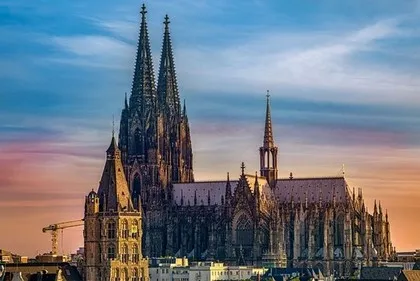
Authors / Photo source: B. Hochsprung/Pixabay.
Gothic means pointed arches, high vaults, and vast stained glass windows. Construction of Cologne Cathedral began in 1248 and was officially completed only in 1880 — blending medieval vision with 19th-century grandeur. Its colorful windows glow like jewels, while the soaring spires seem to touch the sky. In Paris, visit Notre-Dame, or in Prague, St. Vitus Cathedral — and you’ll understand why Gothic architecture still inspires awe.
Enjoy the harmony of the Renaissance at Santa Maria del Fiore, Florence.

Authors / Photo source: Andrea Corsi/Pixabay.
The Renaissance was born in Italy and brought back balance, proportion, and beauty to architecture. Santa Maria del Fiore, crowned with Brunelleschi’s great dome, is a symbol of this style — perfectly measured and magnificently grand. You can also admire St. Peter’s Basilica in Rome or the Pitti Palace in Florence.
Step into the dramatic world of Baroque at Santiago de Compostela, Spain.

Authors / Photo source: javier alamo/Pixabay.
Baroque architecture is known for its ornate facades, curves, and rich sculpture. The Cathedral of Santiago de Compostela dates back to the Romanesque period (10th–12th centuries), but its famous exterior was shaped by later Baroque and Neoclassical additions — making a walk here feel like a historical investigation: what’s ancient, and what was “dressed up” later? In Rome, visit the Church of Il Gesù, or in Munich, the Asamkirche — both breathtaking examples of Baroque drama.
See the order and symmetry of Classicism at the Konzerthaus, Berlin.
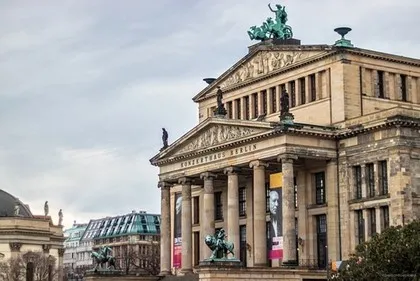
Authors / Photo source: Bernardo Ferreria/Pixabay.
After the exuberance of Baroque came a return to simplicity. Classicism favors clean lines, columns, and balance. The Berlin Konzerthaus resembles an ancient temple, yet feels welcoming and modern. Buildings like this seem to whisper: “everything is in its place”.
Discover the lightness and fantasy of Rococo at Amalienburg, Germany.
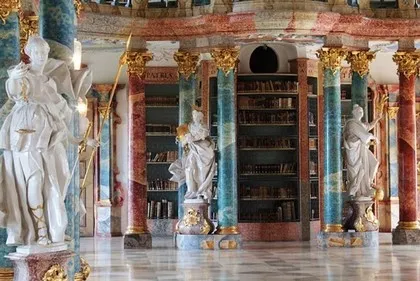
Authors / Photo source: Pixabay.
Rococo was born in France and quickly swept across Europe — from Paris to Dresden to Munich. Everywhere, architects built graceful palaces and garden pavilions designed for leisure, not power. It was a style of pleasure: free from the heaviness of Baroque, yet equally devoted to beauty.
A brilliant example of this “celebration in stone” is Amalienburg, a hunting pavilion in Munich’s Nymphenburg Park. Built in the 18th century for Electress Amalia and designed by architect François de Cuvilliés, it looks modest from the outside but is pure delight within — mirrored walls, gilded ornaments, blue panels, and a play of light that makes every room feel like a ballet set. For more Rococo splendor, visit the Amiens Mansion in France or Sanssouci Palace in Germany.
Step into an oriental fairytale of Moorish style at the Alhambra, Spain.
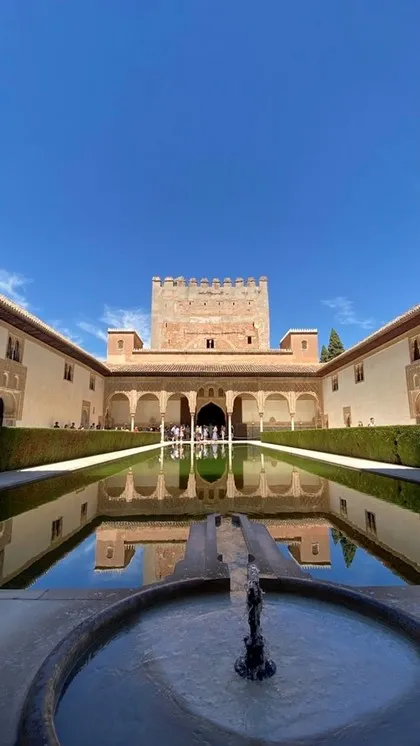
Authors / Photo source: Andrea Graziano Gervasoni/Unsplash.
The Alhambra in Granada is a palace where architecture becomes poetry. Carved walls, arches, and tranquil courtyards with pools create an atmosphere of peace and beauty. Moorish style absorbed the essence of Islamic art — geometry, patterns, and light. Visiting here is a true feast for the eyes and mind.
Explore the curves, flowers, and freedom of Art Nouveau at Castel Béranger, France.

Authors / Photo source: Snap Wander/Unsplash.
The late 19th century brought a new movement — Art Nouveau (called *Liberty* in Italy and *Jugendstil* in Germany). It celebrates flowing lines and natural motifs. Hector Guimard’s Castel Béranger in Paris looks like something out of a fairy tale — everything moves, everything breathes. You can feel a similar spirit at Palazzo Castiglioni in Milan.
Appreciate the beauty and simplicity of Functionalism at Finlandia Hall, Helsinki.

Authors / Photo source: finlandiatalo.
Functionalism is simple: form follows function. Finnish architect Alvar Aalto designed Finlandia Hall to be both practical and harmonious — with white marble, clean lines, and abundant light. Here, beauty arises from purpose and precision.
Architecture takes time and planning — the right angles, convenient access, and a clear route. An airport transfer gives you comfort, time savings, and a local driver-guide who knows the best ways between landmarks. Instead of losing an hour searching for parking, you can spend it inside a cathedral or museum — the perfect rest after your flight. Want to turn your architectural route into a smooth and inspiring journey? Book your airport transfer with Intui and forget all about transport worries!
More travel photos in our Telegram channel.
Read also other Intui travel news: Catch the Northern Lights in Europe! Best Spots for Magical Nights.
Intui offers the opportunity to earn money for bloggers and experts in the field of tourism by participating in an affiliate program.
Petrichenko Rimma & Intui travel


